One lap of the business, every quarter
- Find a dealGreenfield sites, running plants, distressed ones
- Win itTrade clauses for price, then outbid three rivals
- Build itSolar in a year, wind in two, if the permits move
- Switch it onWeather, seasons and your plant manager decide the output
- RefinanceSwap the construction loan and pull your cash back out
- Do it againThe faster the money comes back, the faster you grow
The term sheet is the game
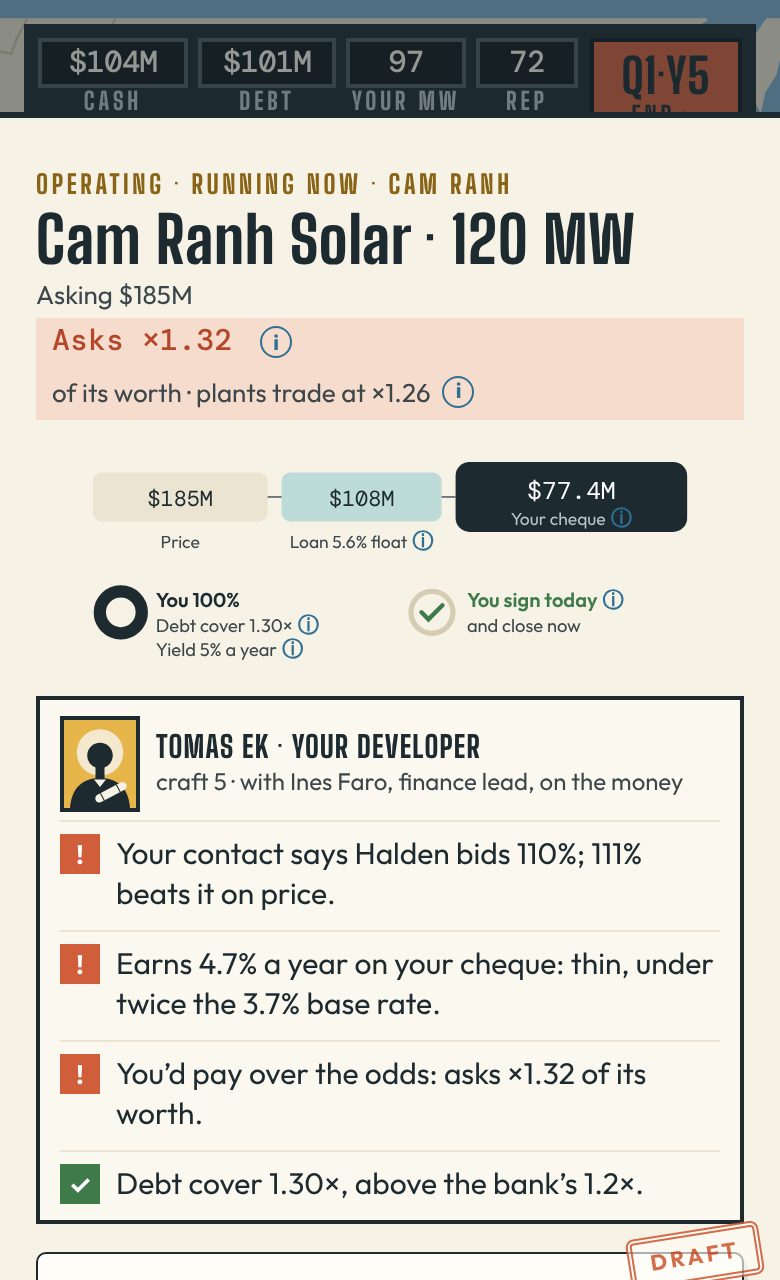
Every deal is a short contract. A drag-along takes 10% off the price. A covenant makes the loan cheaper. An earn-out lets you in for a fifth less. You sign, the plant is yours, and years later the clause comes back as a card with the year you signed it.
You don’t need the jargon first. Every term keeps its real name, with a plain line under it and an ⓘ that shows where this deal sits. And your own people read the deal for you, worst first: your developer on the price and the rivals, your finance lead on the money. The better they are, the more they see, and a weak one says what they can’t tell.
You also choose who buys the power: the utility at a fixed $70/MWh for 20 years, a company that pays more but wants its power delivered, or the market, which swings every quarter.
Then you bid. Halden Power pays up but signs slowly, Vireo Capital is quick and careful, Bluegate Infra waits for a slump. Come close and the owner calls for best and final.
A real map, and real weather on it
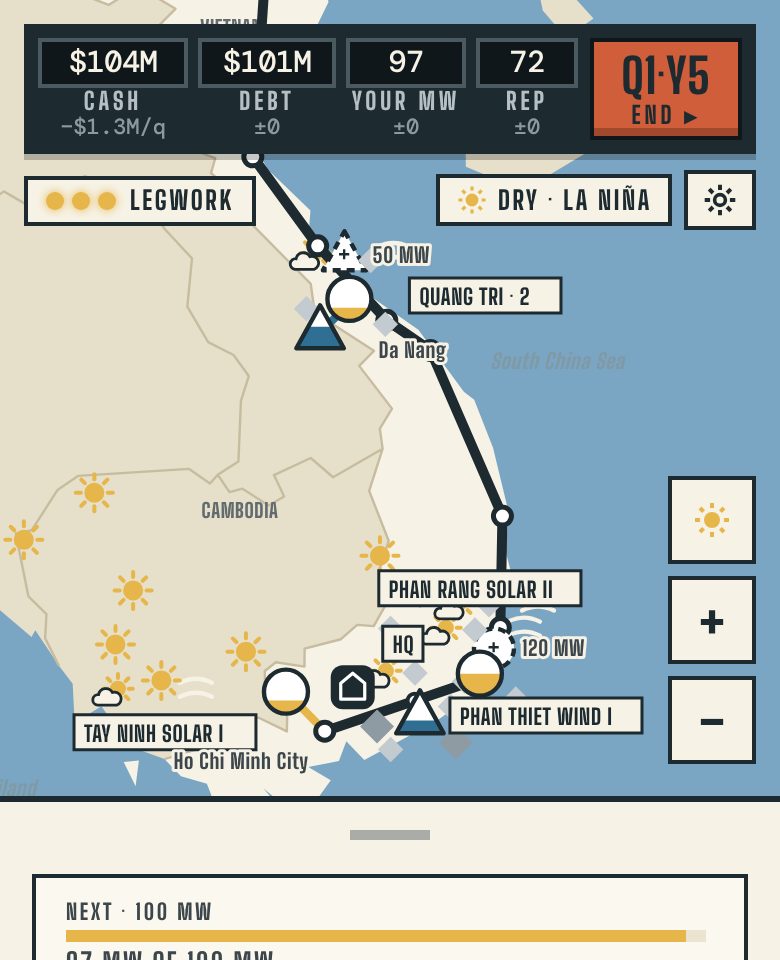
Your plants sit on the actual coasts and plains of Cambodia, Vietnam, the Philippines, Malaysia and Spain, and once you grow, across the borders. Solar peaks in the dry season and fades in the monsoon; wind on the coast blows hardest in the northeast monsoon. El Niño years run sunny, La Niña years bring the typhoons.
A storm on the coast can shut a wind farm for a quarter. Weather cover costs a little every quarter and pays when it goes wrong.
You are not the company
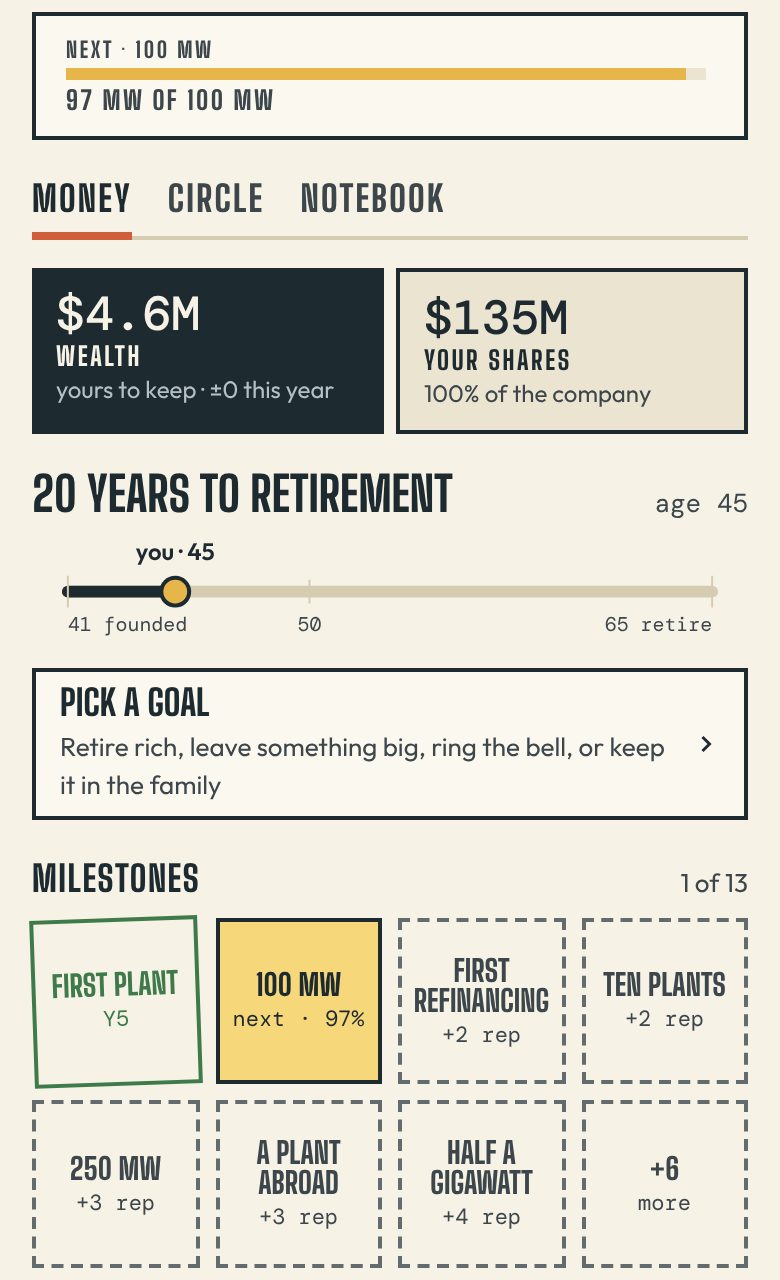
You keep your own wallet. Pay yourself, take dividends, sell shares, or sign a personal guarantee when the bank wants one. The career ends at 65: you pick a successor, and the game plays the next ten years without you.
Two scores at the end. Wealth is what you took home. Legacy is what the company is worth ten years after you left. Taking too much out of one can sink the other. Pick a goal to play for (retire rich, leave something big, ring the bell, keep it in the family) and collect milestones on the way.
Your own time is the scarce thing
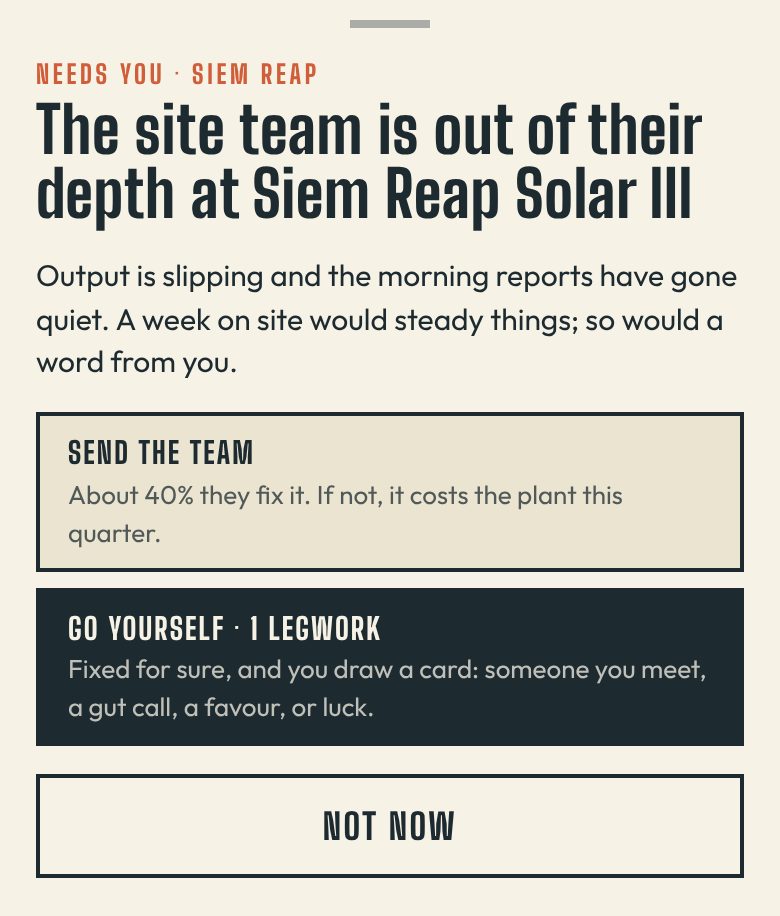
Your staff run the company. When something goes wrong a pin appears on the map: a stalled permit, a landowner dispute, a plant manager out of their depth. Send the team, or go yourself with one of your three legwork points a quarter.
Going yourself draws a card: someone you meet, a gut call with the odds shown, a favour that will be called in later. Some favours pay more because they are conflicted, and with weak controls they stay on the books until they surface.
What it is worth, and what the market pays
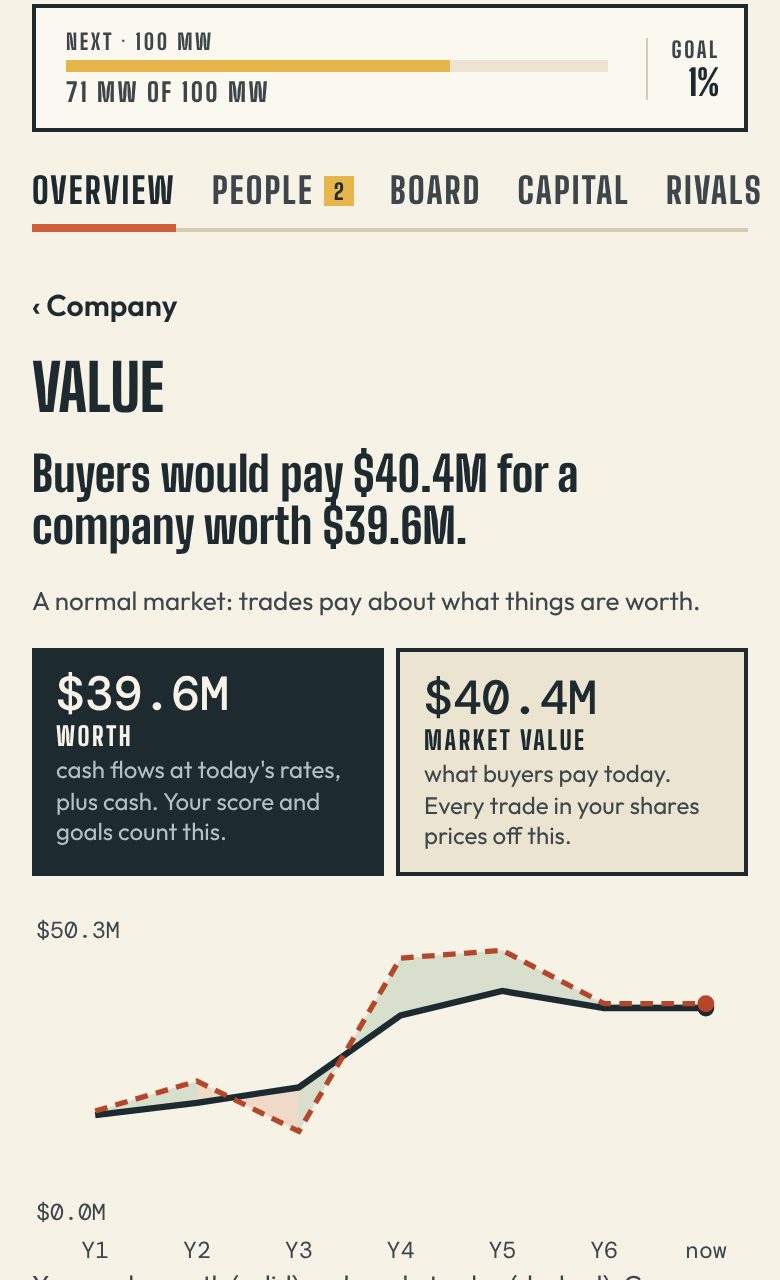
Your company has two values. Worth is what its plants' cash flows are worth at today's rates, plus its cash: it is what your score counts. Market value is what buyers would pay today, and the market's mood swings it a long way either side.
Every trade in your shares prices off the market: raising money, selling shares, a raider's bid, selling the whole company. So raise when buyers pay over worth, and buy plants when they pay under.
Raise money, and you answer to a board
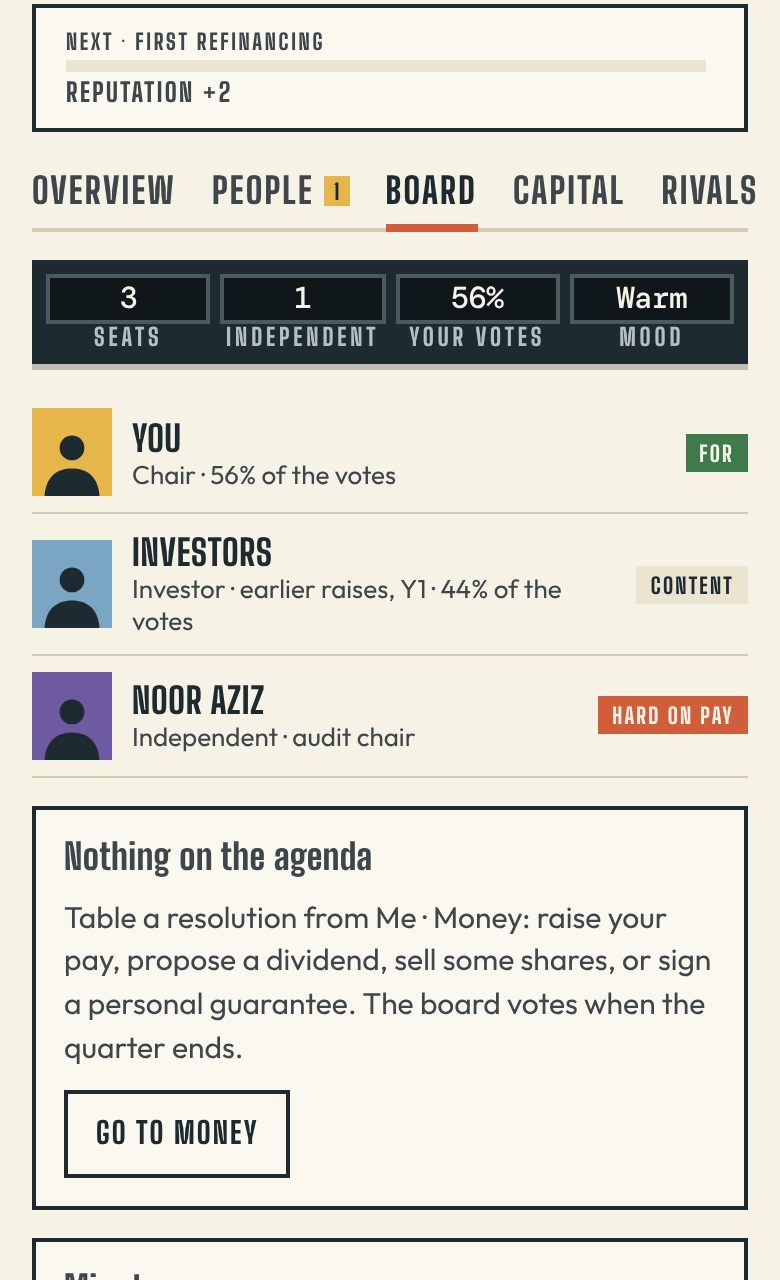
Bring in investors and they want seats. Independent directors arrive with stronger controls. A raise in your pay, a dividend or a share sale goes to a vote at the end of the quarter, and a board that turns you down will not hear it again for a year.
Controls cost money and slow you down. Too few and something blows up: a fine, a side letter, an auditor who will not sign.
The Watt Street Journal closes every quarter
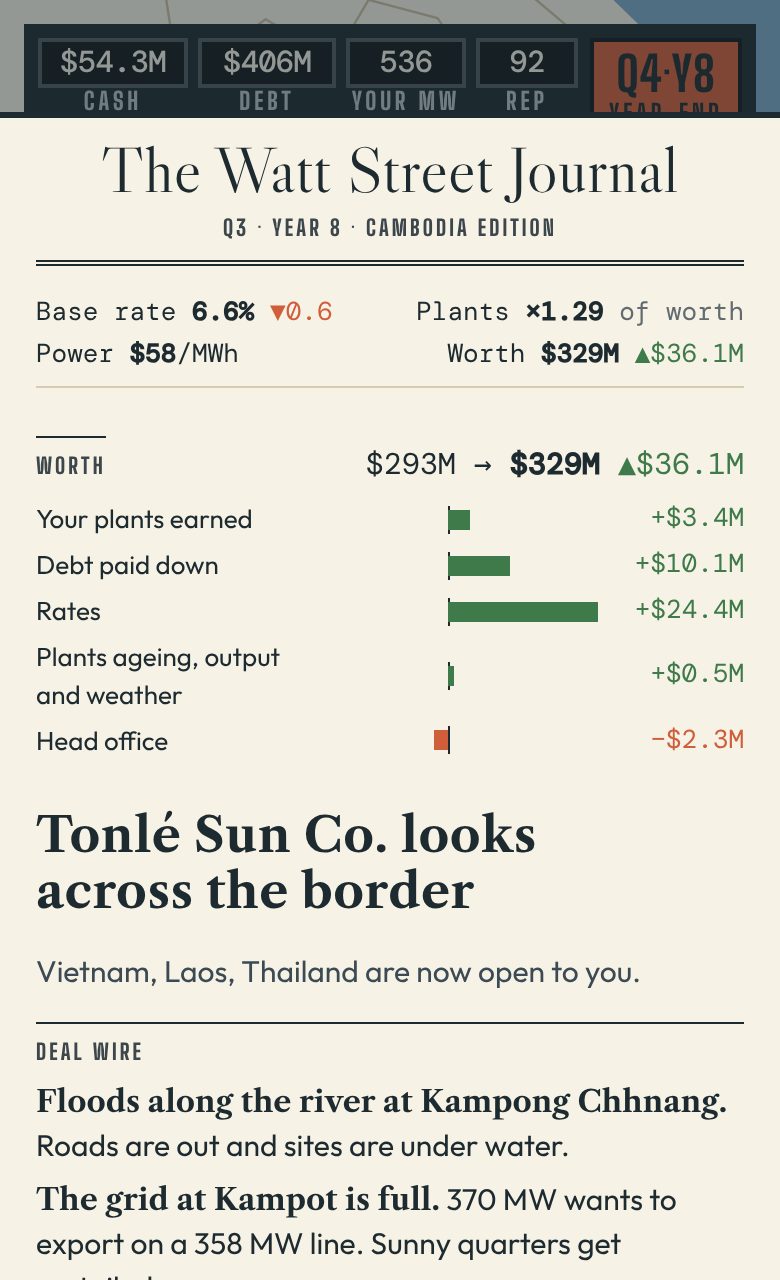
The lead story, who bought what, the base rate and what plants trade at, why your worth moved, and the league table against your rivals. The rumour mill is right about three times in four.
At year end it hands out the awards. Your people can make the cover, and an award winner asks for a raise.
Hire a team, and decide what they may do
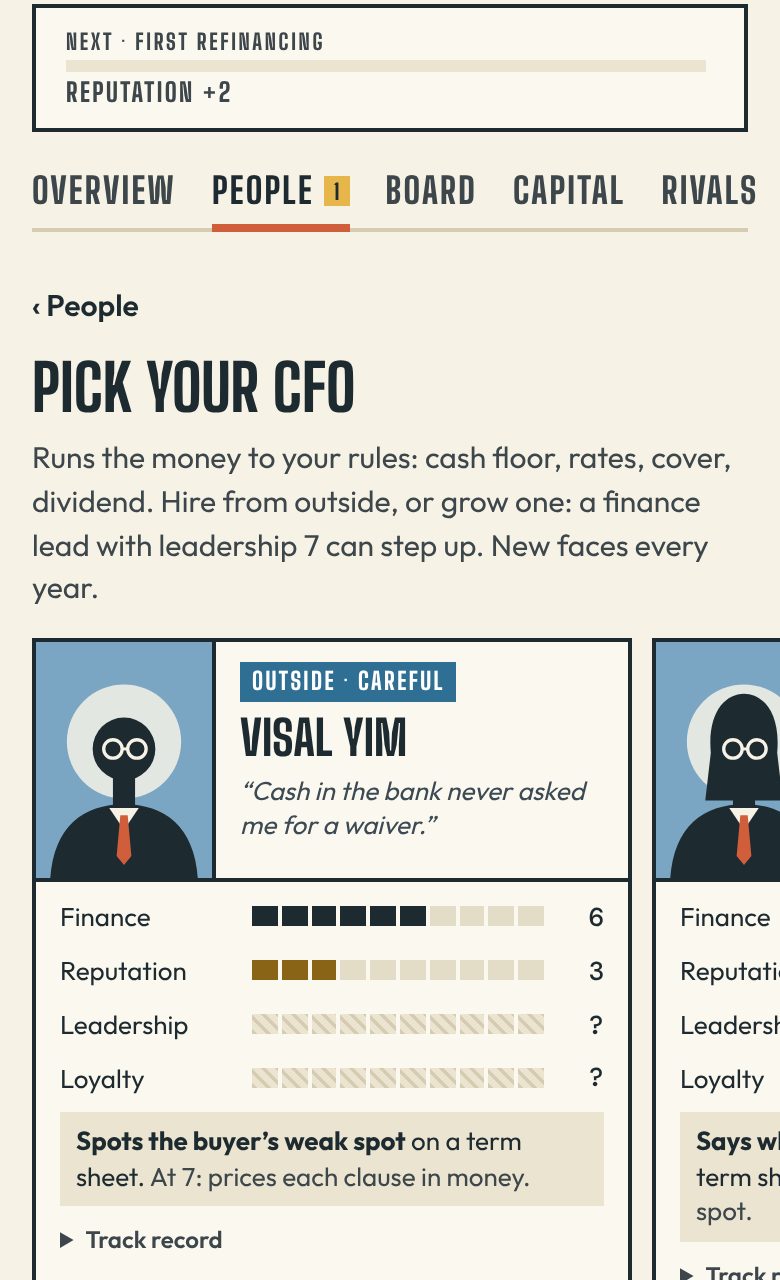
As the company grows, four seats open: a CFO for the money, a COO for the plants, a CIO for deals and a CPO for people. Promote from your team or hire a name from outside. Check their references before you do: about one in five pads the record.
Each one works to rules you set, and they are paid in options that only pay if the company grows. Their craft decides how much they read for you on a term sheet. A year in, you find out whether you hired the person on the CV. With a COO you can switch on Run the year and let them play a year at a time.
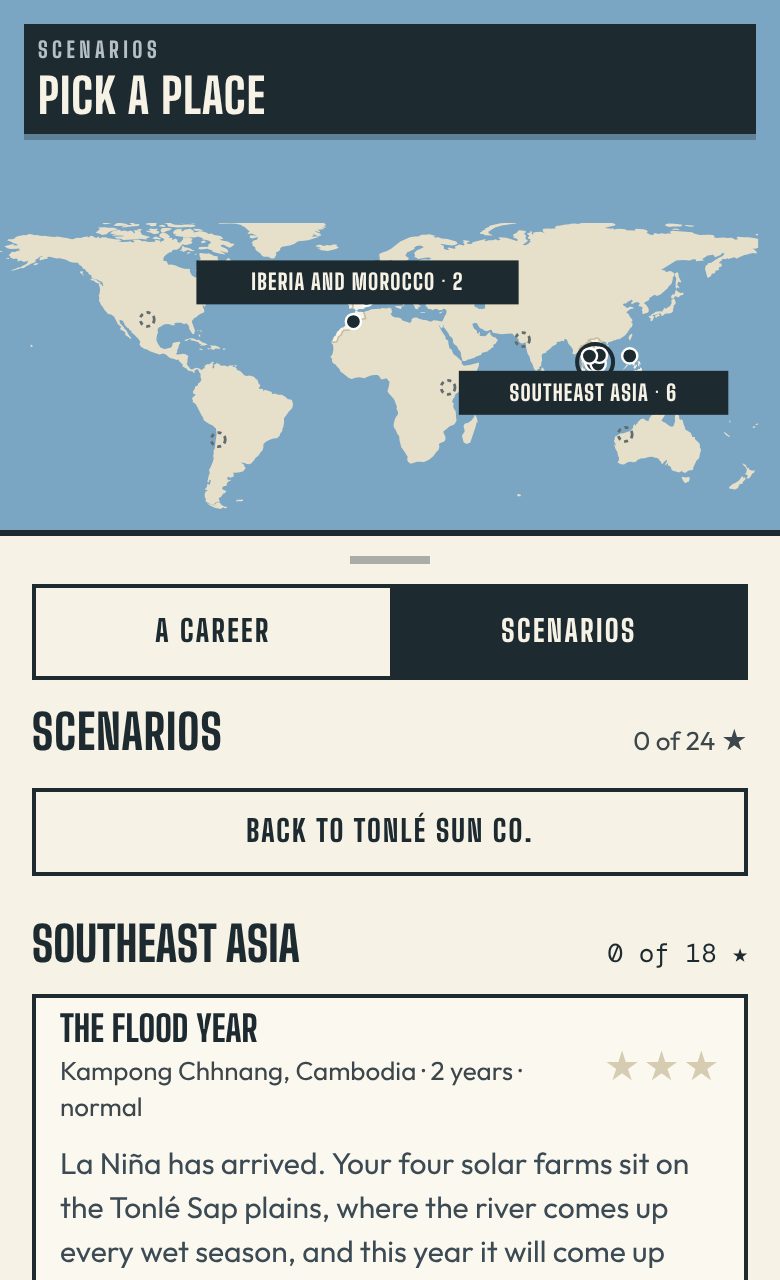
Or play a scenario in twenty minutes
Eight short games on a world map: a flood year in Cambodia, a rate shock in Vietnam, a dam in Laos, a fire sale in Spain. A fixed start, a clock and one number to beat. Three stars: pass it, beat the pro, reach par.
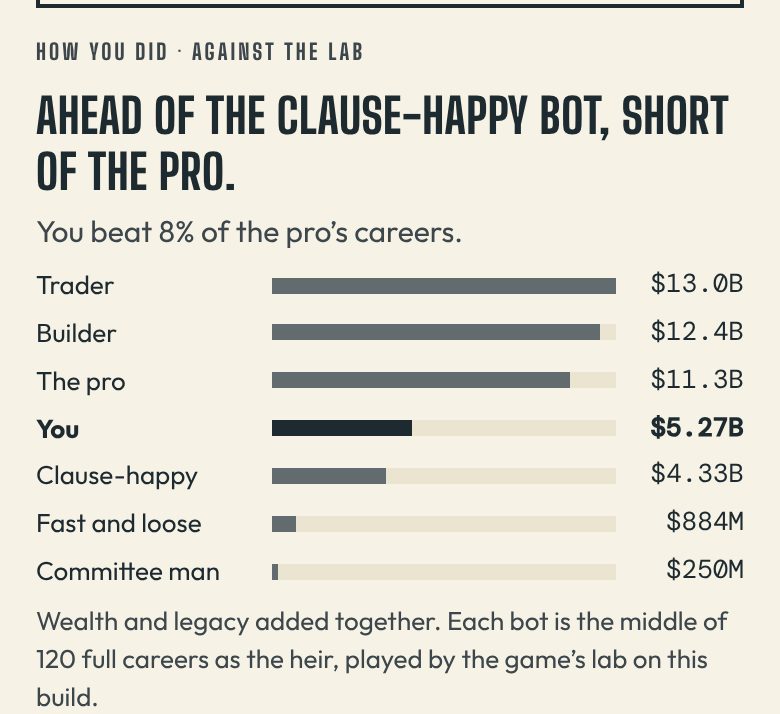
At the end, see how you did
The game's lab plays hundreds of careers with simple bots. When yours ends, it sets you beside them for the same company: ahead of the builder, short of the pro.
Pick where you start
- The garage developerTwo founders and a rented garage in Phnom Penh. No plants, expensive debt. Hard.
- The utility spin-outSpun out of a utility in Ho Chi Minh City with one running plant, and a drag-along the old parent kept. Normal.
- The heirA family fortune in Manila and six cousins on the payroll, who cost face to let go. Tricky.
- The bankers who leftFour project bankers from Singapore building in Malaysia, with the best loans and almost no equity. Expert.
- The vultureA Madrid fund with an exclusive bid on a bankrupt wind portfolio in Spain. Half the turbines hide defects. Gamble.
Each one starts under a name of your own: the game offers a local one, and you can roll another or type yours.
Before you start
- What it costs
- Nothing. Watt Street is in early access: it changes often, and the game tells you when a new version is ready.
- New to it
- The garage comes with a guided start: one thing to learn each quarter for its first two years. Every term on a term sheet has a plain line and an ⓘ, and the Rules page has a glossary.
- Where it plays
- In the browser, made for a phone held upright. Add it to your home screen and it opens like an app.
- Your company
- Saved on this device after every move, and in the cloud too if you sign in with a Field & Fortune account. You can export it as a file from Settings.
- How long
- A quarter takes a minute or two. A career runs from your founding age to 65, so 24 to 36 years, played in bursts. A scenario takes about twenty minutes.
- Is any of it real
- The map is. Every company, bank, fund, rival and person on it is invented.